Climate Change - Possible Consequences
of Global Warming
Temperature:
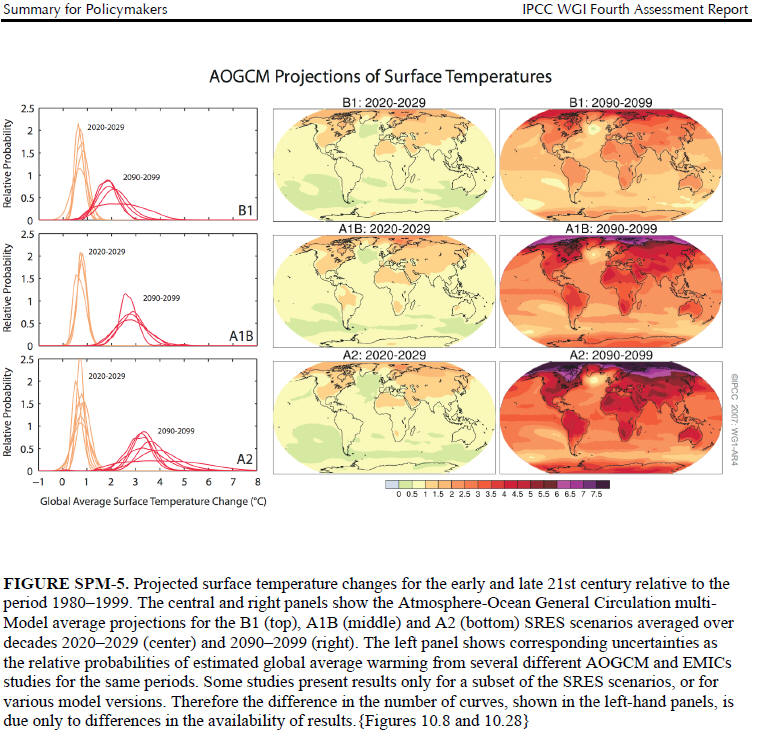
- Globally averaged surface
temperature is projected to increase by 1.4 to 5.8 ΊC
over the period 1990-2100.
- Greater relative warming in the
higher latitudes
- Land areas will warm more and
faster than ocean areas
- The projected rate of warming
is much larger than the observed changes during the 20th century
and is very likely to be without precedent during at least the last
10,000 years, based on palaeoclimate data.
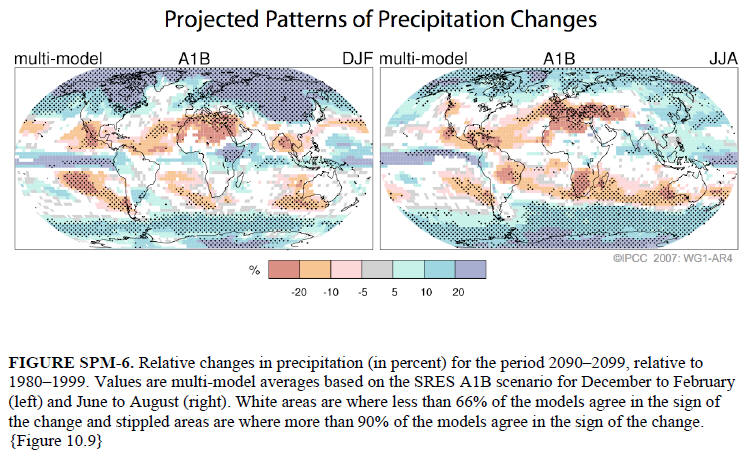
Precipitation:
- Globally averaged water vapor,
evaporation and precipitation are projected to increase.
NOTE:
At the regional scale, increases and decreases will be observed.
|
Extreme
Weather:
-
More hot days and heat waves are
likely over nearly all land areas
-
Frost days and cold waves are
very likely to become fewer
-
Frequency of extreme
precipitation events is projected to increase
-
General drying (increased
drought frequency) of all mid-continental areas during summer.
Glaciers
and Snow Cover:
-
Glaciers and ice caps will
continue their widespread retreat during the 21st century
and NH snow cover and sea ice are projected to decrease further.
-
NOTE:
The Antarctic ice sheet is likely to gain mass because of
greater precipitation
Sea
Level Rise:
-
A sea level rise of 0.09
0.88 meters is projected for 1990-2100.
-
Thermal
expansion of the oceans
-
Loss
of mass from glaciers and ice caps
|